Sunday, 30 November 2025

Imp Meta Ads QA

πŸ” Diagnose the Reason for Low CTR

1️⃣ Check Creative Fatigue (the most common cause)

What to look for:

  • Frequency > 2.5–3
  • CTR dropping week-over-week
  • CPM rising
  • Relevance score / ad quality dropping

Why it happens:

Audiences have seen the ad too many times → scroll past → CTR sinks.

Fix:

  • Refresh creative: new images, new videos, new headlines
  • Test new formats: reels, carousel, student testimonial videos

2️⃣ Analyze Audience Relevance

Check:

  • Is the same audience being targeted for too long?
  • Has audience become too broad/narrow?
  • Lookalike quality degraded?
  • Are interest groups still relevant?

Fixes:

  • Refresh audiences every 30–45 days
  • Add new lookalikes:

  1. High-intent website visitors
  2. Brochure downloaders
  3. Completed application lookalike (best)

  • Expand age/location slightly
  • Remove saturated audiences

3️⃣ Check Ad Placement Issues

Sometimes CTR drops because:

  • Ads are running heavily on low-performing placements (Audience Network, In-stream video, Right column)

Diagnosis:

  • Check breakdowns → placement inside Ads Manager.

Fixes:

  • Turn off poor placements
  • Prioritize: Feeds, Reels, Stories

4️⃣ Evaluate the Hook + Message Relevance

Your message may no longer match student motivation.

Questions to ask:

  • Is the ad addressing what students care about?
  • Is the headline strong?
  • Is the creative talking about features instead of benefits?
  • Is the CTA too generic?

Fixes (Education example):

  • Highlight admissions open
  • Showcase placements
  • Show campus facilities
  • Use student faces
  • Add urgency: “Last few seats”, “Application closes soon”

5️⃣ Review Ad Quality Ranking

Three metrics:

  • Quality ranking
  • Engagement ranking
  • Conversion ranking

If these fall below average → Facebook reduces reach → CTR drops.

Fix:

  • Completely new creative + new angle
  • Better copywriting
  • Use video testimonials or campus reels (high engagement formats)

6️⃣ Check Competitor Activity / Seasonal Shifts

During admission seasons, competition rises → CPM goes up → CTR may drop.

Diagnosis:

  • Sudden spike in CPM
  • Same creative performing worse at peak season

Fixes:

  • Increase bids or budgets slightly
  • Improve creative competitiveness
  • Run more high-attention formats (video, reels)

7️⃣ Inspect Landing Page Preview Issues

For lead forms, check Instant Form Preview.

Potential problems:

  • Form not loading
  • Redirect warning
  • Slow load for website landing pages
  • Message mismatch between ad & form headline

Fixes:

  • Shorten form
  • Align headline with ad
  • Improve creative → form relevance

πŸ” Fixing the CTR Drop (Action Plan)

✔ Step A: Rapid Creative Refresh
  • Create 3–4 new creatives:
  • 1 video (campus tour / student testimonial)
  • 1 static (USP highlights)
  • 1 carousel (programs offered)
  • 1 reel-style short video
✔ Step B: New Copy Variations

Test:
  • New hooks
  • Stronger CTA
  • Stronger program-specific messaging
Examples:
  • “DSU UG Admissions 2026 Now Open – Apply Today!”
  • “100% Placement Support | Top Ranked University in Bengaluru”

✔ Step C: Audience Refresh

Actions:
  • Duplicate ad set
  • Add fresh interest clusters
  • Add new lookalikes
  • Exclude old engaged users
✔ Step D: Fix Placement Efficiency

Turn off low-CTR placements:
  • Audience Network
  • Right column
  • In-stream
Focus on:
  • Facebook Feed
  • Instagram Feed
  • Stories
  • Reels
✔ Step E: Improve Ad Quality

Use:
  • Student testimonials
  • Campus visuals
  • Before-after type career messaging
  • Ranking/placements credibility signals
✔ Step F: Monitor 24–48 Hours After Fixes

Track:
  • CTR trend
  • CPM
  • CPC
  • Relevance scores
  • Lead quality
If CTR improves but leads stay low → fix the form or offer.
If CTR doesn’t improve → test new angles (academics, campus life, placements, rankings).

πŸ” What’s your approach to A/B testing on Meta?

  • Test one variable at a time
  • Use separate ad sets for clean testing
  • Run for at least 7–10 days
  • Compare CTR, CPC, CPL, and lead quality
  • Consider cultural nuance for international audiences
  • Scale winning creative to new regions

πŸ” If CTR drops suddenly, what do you do?

  • Check frequency (creative fatigue)
  • Refresh creatives
  • Check audience overlap
  • Remove low-performing placements
  • Improve copy hook
  • Review CPC and CPM (competition)

πŸ”₯ Walk me through your Meta Ads campaign structure.

1. Campaign Level – Strategy
  • Clearly defined objective (Leads, Sales, Traffic, Engagement).
  • A/B separated campaigns for Prospecting vs. Retargeting.
  • CBO for scale, ABO for testing.
2. Ad Set Level – Precision Targeting
  • Warm vs. cold audiences separated.
  • Different ad sets for:
  1. Lookalikes (1%, 2–5%)
  2. Interest clusters (3–4 tightly related interests)
  3. Broad (no interests — best for scale)
  • Placements → Advantage+ placements for efficiency.
3. Ad Level – Creative Variations
  • 3–4 creatives per ad set: 1 video, 1 static, 1 carousel, 1 UGC.
  • Creative tailored to funnel stage (TOFU → storytelling, BOFU → USP + CTA).
  • Regular refresh every 10–14 days depending on creative fatigue.

πŸ”₯ What is your process for diagnosing a drop in performance?

1. Funnel Breakdown
  • CPM ↑ → Audience or competition issue
  • CTR ↓ → Creative or messaging issue
  • CPC ↑ → Relevance or auction overlap
  • CVR ↓ → Landing page, offer, or lead form friction
  • CPL ↑ → Combination of the above
2. Compare Against Benchmarks

I check 7-day vs. 30-day trends to see if the issue is sudden or gradual.

3. Analyze Breakdown Reports
  • Age
  • Gender
  • Placement
  • Country
  • Device
4. Fix Based on Diagnosis
  • CTR low → Refresh creatives, new hooks, new formats
  • CPC high → Broaden audience, reduce overlap
  • CPM high → Test new interest clusters / switch to broad
  • CVR low → Improve landing page speed + clarity
  • Leads low → Remove unnecessary form fields

πŸ”₯ How do you approach scaling Meta Ads profitably?

1. Vertical Scaling (Same Campaign)
  • Increase budget by 20–30% every 48 hours to avoid resetting the learning phase.
  • Turn winning ad sets into CBO for more efficient delivery.
  • Duplicate winners into higher budgets if scaling aggressively.
2. Horizontal Scaling (Expand Reach)
  • Add new lookalike ranges (1%, 3%, 5%)
  • Add broad ad sets (No interest targeting)
  • Launch new creatives to reduce fatigue
  • Expand into new countries / languages
  • Add new placements
  • Use Advantage+ Audience for algorithm-driven reach
My rule:
“Never scale the budget without scaling creatives.”
This maintains efficiency while increasing volume.”

πŸ”₯ How do you test creatives in Meta Ads?

Phase 1: Hook Testing
  • Test 3–5 hooks on the same video/body copy
  • Choose the best based on 3-sec view %, CTR
Phase 2: Format Testing
  • Video vs. Static vs. Carousel
  • Test thumb-stoppers & first 3 seconds
Phase 3: Angle Testing

Examples:
  • Emotional angle
  • Pain-point angle
  • Product-benefit
  • Social proof
  • Urgency/scholarship angle (for education)
Phase 4: Iteration
  • Take winners → Refresh with new variations
  • Take losers → Study why — improve lines, visuals, CTAs

πŸ”₯ What metrics do you prioritize while optimizing?

Top of Funnel (Awareness/Prospecting)
  • CPM
  • CTR
  • Thumb-stop rate
  • Add-to-cart / View content
  • Frequency
  • Hook retention
Middle of Funnel
  • CPC
  • Landing page view rate
  • Time on site
  • Lead quality indicators
Bottom of Funnel
  • Conversion rate
  • Cost per lead / sale
  • ROAS
  • Attribution by 1-day click

πŸ”₯ What’s your strategy for retargeting on Meta Ads?

1. Warm Retargeting (7–14 days)
  • Website visitors
  • Video viewers (50%+)
  • Engaged users
  • Creative: Social proof + benefits + strong CTA
2. Hot Retargeting (1–3 days)
  • Added to cart
  • Initiated checkout
  • Opened lead form but didn’t submit
  • Creative: Testimonials, FAQs, objection handling
3. Super Hot (1 day)
  • Abandoned forms
  • Repeated checkout users

πŸ”₯ How do you improve lead quality?

  • Use higher-intent lead forms
  • Ask qualifying questions
  • Retarget video engagers instead of random cold traffic
  • Exclude junk audiences (freebie seekers)
  • Create ROI-focused lookalikes:
  1. Completed lead form
  2. High-quality leads
  3. Enrolled students OR high-value buyers

πŸ”₯ What is your approach to attribution in Meta Ads?

  • 7-day click for longer journeys
  • UTMs in GA4 for cross-platform comparison
  • Offline conversions / CRM match to verify lead-to-enrollment or sale
  • Break-even point vs. blended CAC

πŸ”₯ How do you reduce CPL or CPA?

Creative Level
  • New hooks, better thumb-stoppers
  • UGC ads + testimonial creatives
  • Shorter, sharper ad copy
Audience Level
  • Moving to broad targeting
  • Breaking large interest groups into tight clusters
  • Updating lookalike seeds
Technical Optimization
  • Improve landing page speed
  • Use conversion API
  • Remove 3–4 unnecessary form fields
  • Improve lead form flow
Retargeting Improvements
  • Shorter windows
  • Stronger BOFU messaging

Thursday, 27 November 2025

Regex for SEO

 Simple regex cheat sheet

Start inside Google Search Console:

πŸ‘‰ Go to Performance → Queries → Filter → Custom (Regex)

Now use these regex filters to uncover keywords that actually move the needle:

1. Short-Tail Queries (1–2 words)

^[^\s]+(\s[^\s]+)?$ 

2. Medium-tail keywords

^\S+(?:\s+\S+){2,3}$

3. Long-Tail Queries (5+ words)

^\S+(?:\s+\S+){4,}$

4. Question Keywords

^(what|why|how|where|when|who|can|is|are|do|does|should|which)\b

5. Blog-Style Keywords

^(how to|best|guide|tips|ideas|review|top|learn|examples|benefits)\

6. Buy-Intent / Commercial Queries

^(buy|purchase|price|cost|hire|near me|services?|company)\b

Wednesday, 26 November 2025

Imp Google Ads QA

πŸ”₯ Quality Score

QS is driven by Ad Relevance, Expected CTR, and Landing Page Experience.

  • Tightening keyword → ad → landing page alignment
  • Writing intent-specific ad copy
  • Improving LPX with UX team (page speed, mobile UX, relevance)
  • Removing keywords hurting CTR
  • Lowering bounce rate through LP testing
  • Adding high-intent negatives to improve expected CTR.”

πŸ”₯ How do you manage a large-scale search account daily?

Every day I run the account using an algorithmic routine:

  • Auction checks – Ad Rank, IS, rank drops
  •  Efficiency filters – identify non-converting queries/keywords
  • Bid architecture – adjust Target ROAS or CV based on volume goals
  • Query mining – add incremental keywords that show strong product-to-query alignment
  • LPX audits – identify pages hurting Quality Score
  • Performance stabilization – ensure signals (conversions, budgets, seasonality) are consistent for Smart Bidding.

πŸ”₯ Impression Share Diagnostic Framework

Lost IS (Rank) means:

  • Low bids
  • Low QS
  • Competition increased
  • Ad Rank issues

How you respond:

  • Increase bid or loosen TROAS
  • Improve QS components
  • Tighten match types
  • Improve LPX

πŸ”₯ How do you improve LS (Search Lost IS) Rank?

  • Increase bids
  • Lower TROAS
  • Improve QS
  • Reduce fragmentation
  • Improve LPX

πŸ”₯ Traffic Purification Loop

  • Identify bad queries/keywords
  1. Low CTR → relevance issue
  2. High CPC + low value → cost pressure
  3. Low expected CTR → hurting QS
  4. Conversions < threshold
  • Pause / lower bids
  • Monitor recovery signs
  1. Quality Score improvement
  2. CTR improvements
  3. ROAS improvement
  • Reinstate with small budgets
  • Scale if stable

πŸ”₯ RCA (Root Cause Analysis) framework

Step 1: Identify the symptom
  • ROAS drop
  • CPC spike
  • Click drop
  • Conversion drop
  • IS loss
  • QS drop
Step 2: Check auction metrics
  • CPC
  • IS Lost Rank
  • Ad Rank
  • Top vs Absolute Impression Share
  • Overlap rate with competitors
Step 3: Check user-level metrics
  • CTR
  • CVR
  • Bounce rate
  • Device segmentation
  • Audience segmentation
Step 4: Check platform-side factors
  • Bid strategy learning
  • Conversion signal delays
  • Budget limits
  • LPX issues
Step 5: Implement a corrective action
  • Adjust bids
  • Improve ads
  • Add negatives
  • Update landing page
  • Adjust TROAS
  • Expand keywords

πŸ”₯ What is Keyword Intent Mapping?

Aligning queries to correct match types and campaigns based on intent level:
  • High-intent → exact match
  • Mid-intent → phrase
  • Discovery → broad
This increases QS, improves control, and strengthens ad relevance.”

πŸ”₯ How do you ensure Smart Bidding stability?

  • Single source of truth conversion
  • No conflicting bid changes
  • Stable budgets
  • Long-enough learning windows
  • Consistent campaign signals
  • No over-fragmentation

πŸ”₯ Smart Bidding

Target ROAS (TROAS)
  • When to loosen (to increase volume)
  • When to tighten (to improve efficiency)
  • Why TROAS needs consistent signals
  • Importance of conversion lag analysis
Maximize Conversions / Conversion Value
  • Used for scaling during budget-free environments
  • Best for early learning or rapid share acquisition
Key phrase to use:

“Smart Bidding only works if you maintain signal purity. My job is to protect the algorithm from noise.”

πŸ”₯Deep Auction-Level Explanation

1️⃣ Maximize Conversions (or Max Conversion Value)

Best when the goal is:
  • Maximum traffic & reach
  • Enter more auctions
  • Win impressions aggressively
  • Collect signals quickly
  • Launch new campaigns/products
Why it works well in auctions:
  • It removes efficiency constraints
  • Algorithm bids more aggressively
  • You get higher impression share
  • Good for unstable environments with low data
  • Smart Bidding tries to maximize clicks/conversions within your budget
Downside:
  • CPC increases
  • ROAS becomes unpredictable
  • Not suitable for mature accounts
2️⃣ Target ROAS (tROAS)

Best when the goal is:
  • Efficiency
  • Maintaining profitable auctions
  • Defending ROAS
  • Controlling expensive keywords
  • Running large-scale accounts with stable conversion data
Why it works best in auctions for profitability:
  • Algorithm bids only when predicted value ≥ ROAS threshold
  • Eliminates low-value auction entries
  • CPC is controlled more tightly
  • Search Lost IS (Rank) may increase (because you're selective), but ROAS improves
  • Works extremely well in stable, high-volume campaigns
Downside:
  • Restricts volume
  • Sometimes avoids competitive auctions
  • Requires strong, consistent conversion signal density
  • Not ideal for new keywords or new markets

πŸ”₯How Google’s Auction Reacts to Each Strategy

Depends on business goal, but primary KPIs:
  • CTR
  • CPC
  • Quality Score
  • Conversion Rate
  • Cost per Conversion
  • ROAS
  • Impression Share
  • Search Lost IS (budget & rank)

πŸ”₯ What is Impression Share?

Impression Share = % of total possible impressions your ads actually got.

Types:
  • Search Impression Share
  • Search Lost IS (Budget)
  • Search Lost IS (Rank)
If lost due to budget, I scale budget.
If lost due to rank, I improve QS or bid.

πŸ”₯ What is the difference between Broad, Phrase & Exact match?

  • Broad: Wide reach, AI-driven relevance, good for discovery
  • Phrase: Medium control, matches close meaning
  • Exact: Tight control, high intent
I usually begin with broad + smart bidding, then refine using search terms.

πŸ”₯ Explain negative keywords. How do you use them?

Negative keywords prevent ads from showing on irrelevant queries.

I add them:
  • From Search Terms Report
  • Using common exclusions (free, jobs, meaning, PDF etc.)
  • At Ad Group, Campaign, or List level
Negatives improve CTR, CPC, and Quality Score.

πŸ”₯ How do you measure success in Google Ads?

Success = alignment of KPIs with business goals.

I measure:
  • Leads quality & CPL
  • Revenue & ROAS
  • CAC vs LTV
  • Conversion rate trends
  • Funnel performance (Search → Remarketing → Conversion)

πŸ”₯ What are the main extensions you use?

  • Sitelinks
  • Callouts
  • Structured Snippets
  • Call Extensions
  • Location Extensions
  • Image Extensions
  • Price Extensions
These increase CTR and improve Ad Rank.

πŸ”₯ How do you optimize a campaign that is not performing well?

  • Check conversion tracking
  • Review search terms & add negatives
  • Improve ad copy CTR
  • Fix landing page issues
  • Re-evaluate bid strategy
  • Pause wasteful keywords
  • Analyze device/location performance
  • Test new creatives
I optimize based on data, not intuition.

πŸ”₯ How do you handle high CPA?

  • Improve landing page
  • Add high-intent keywords
  • Add more negatives
  • Switch to tCPA after 30+ conversions
  • Improve ad relevance
  • Cut waste from low-performing audiences/locations/devices
CPA drops once quality improves.

πŸ”₯ What is your approach to scaling a Google Ads account?

  • Expand winning keywords
  • Add similar audiences
  • Launch YouTube remarketing
  • Increase daily budgets gradually (10–20%)
  • Duplicate top campaigns for performance testing
  • Add new match types
  • Create value-based campaigns (tROAS)
Scaling is methodical, not aggressive.

Thursday, 20 November 2025

GAM Campaign Setup

 Add new orders

  • Navigate to Delivery > Order.
  • Click New order.
  • Go to "General settings" & enter "Order  Name" & "Advertiser Name"
  • Click Add line item or Save.

Set up new line items

  • Navigate to Delivery > Orders.
  • Click the name of an existing order to go to its details.
  • Click New line item.
  • Select Ad type
  1. Display (Standard)
  2. Video or audio
Basic details

  • Enter a name for the line item. 
  • Under "Line item type", select the type i.e Standard (6, 8, 10)priority i.e High & Priority value i.e 6
Creative details


  • Specify the ad sizes of these ad creatives i.e 160x600, 300x250, 320x50, 320x100, 320x480, 728x90, 970x90, 970x125, 970x250
  • Upload the creative using "Bulk Upload Creatives" & update the Landing Page in "Click-through URL
Delivery settings and cost


  • Indicate start and end date
  • Enter volume (quantity, goal, or limit) against which the rate is to be calculated. Volume shown varies depending on line item type selected.
  • Enter the rate—this is the price negotiated with your advertiser or buyer, which is applied to the value for volume of impressions, clicks, or the goal entered.
Adjust delivery

  • Deliver impressions: sets the speed at which the impressions should be delivered for this line item.
  • Display creatives: controls how creatives are displayed on a single webpage when there are multiple active creatives in a line item.
  • Rotate creatives: allows you to define which creative displays as part of a rotation when multiple creatives are associated with a line item.
  • Frequency caps: limits the number of times a creative can be shown to a given user within a specified time period.
Add targeting


  • Add targeting. Targeting allows you to limit where a line item shows ad creatives. Limiting where ads shows helps advertisers reach their intended users, demographic, or audience.
  • Click Save.

Approve an order

  • Find the order you want to approve. You can use universal search or navigate to Delivery Orders to browse or apply filters.
  • Navigate to the details page for the order.
  • Click Approve above the list of line items on the details page.

Formula to calculate CPM?

CPM formula is CPM = 1000 * Amount / Impressions

Sunday, 2 November 2025

Core Web Vitals

Core Web Vitals (CWV) are Google’s user-experience metrics that measure page speed, responsiveness, and visual stability.

They directly influence page experience signals, which in turn affect rankings, crawl efficiency, and user retention.

The three metrics are:

How They Affect Rankings
  • Direct impact: CWV are part of Google’s Page Experience ranking signals. If two pages have similar relevance, the faster and more stable one ranks higher.
  • Indirect impact: Better CWV → lower bounce rate, higher engagement and conversion → positive behavioral signals → stronger SEO over time.
  • Crawl efficiency: Fast, stable pages allow Googlebot to crawl more URLs — important for large documentation sites like Stripe’s.
How to Improve Them

A. Improve LCP (Loading Speed)
  • Optimize hero images and SVGs; use WebP/AVIF formats.
  • Use server-side rendering (SSR) or static generation for docs pages.
  • Implement lazy-loading for below-the-fold assets.
  • Use CDNs (Stripe already does globally) to serve content near the user.
  • Preload key assets: fonts, CSS, hero images.
B. Improve INP (Interactivity)
  • Minimize heavy JavaScript bundles; split code and defer non-critical scripts.
  • Use HTTP/2 and caching to reduce latency.
  • Audit third-party scripts (analytics, chat widgets) that block input.
C. Improve CLS (Visual Stability)
  • Always set width/height attributes for images and embeds.
  • Reserve space for dynamic elements (ads, banners, cookie notices).
  • Load fonts using font-display: swap to avoid text shifts.

What is Largest Contentful Paint (LCP)?

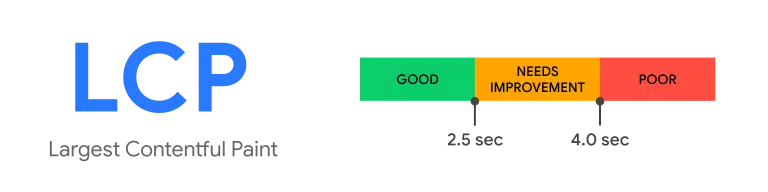
Largest Contentful Paint is the metric that measures the time a website takes to show the user the largest content on the screen, complete and ready for interaction.

Google defines that this metric considers only the content above the page’s fold, meaning everything that appears without scrolling.

There is another relevant point, which is related to the type of content considered. The metric only counts the loading time of what is relevant to the user experience, that is:

  • Images.
  • Image tags.
  • Video thumbnails.
  • Background images with CSS.
  • Text elements, such as paragraphs, headings, and lists.

How to measure it?

You can measure LCP in two ways:

  • Directly on the site, by using a method known as “field”.
  • Through performance simulations performed by algorithms, in this case, the lab mode.

For each of these methods, different tools speed up the work and make the measurement more accurate. Starting with the field method, you could use:

  • Chrome User Experience Report;
  • PageSpeed Insights;
  • Search Console (Core Web Vitals report).

As for the lab tools, the most recommended are:

  • Chrome DevTools.
  • Lighthouse.
  • WebPageTest.

What is a good score?

Since metric monitoring is essential, it is also necessary to understand the minimum performance standards expected.

There’s a specific demand from Google’s algorithms regarding page loading time, considering the main content. In this case, we are talking about up to 2.5 seconds, which is a good result.


How to optimize it?

  • Optimize image sizes

Always use images with the right sizing. Your hosting will suggest specific dimensions, either for the desktop or mobile version. Using the indicated size avoids overloading, which can generate a high LCP. Use Webp format images.

  • Use an image CDN

A CDN service can make images load faster. ImageEngine is a tool that does all the work of image adequacy, considering factors such as accessing device, file size, and user location.

  • Avoid JavaScript to load images

JavaScript loading can slow down the process, so the best thing to do is to leave this work to your browser. That helps to prevent any delay, keeping the LCP within the recommended average.

  • Choose a good hosting service

Your hosting service also impacts pages’ loading time. Therefore, find a quality one that has a good reputation in the market, and, mainly, that offers an adequate infrastructure for your site’s size and volume of access.

  • Minify HTML, CSS & JavaScript
Reduces the file size by removing the space in code
  • Enable caching
  • Use system font
If using special fonts then use code: font-display: swap; in CSS so that initialy it will load system font and then when the fancy font is loaded from server then it will show that.
  • Keep DOM small
Excessive DOM size happens when there are too many DOM nodes (or HTML tags) on your page or when they are nested too deep. 
  • Don't keep JavaScript at top or use defer attribute with JavaScript

Async allows parallel download but files get executed immediately after download. Defer allows parallel download and files get executed after HTML is done parsing. So, Defer is better than Async
  • Get the devices list from Google Analytics and test according to real device that user are using.

What is First Input Delay (FID)?

FID is the time your website takes to start working on first touch/click 

First Input Delay is the metric that measures the delay in response time for a specific user action performed for the first time on a website. 

How to measure it?

Since FID is a stat measured only by real user interaction, it cannot be replicated in a lab setting.

However, Total Blocking Time (TBT) is a metric that essentially measures how much time a browser is blocked and therefore can closely estimate FID. 

To provide a good user experience, sites should strive to have a Total Blocking Time of less than 200 milliseconds when tested on average mobile hardware.

How to find Total Blocking Time (TBT) score of landing page?

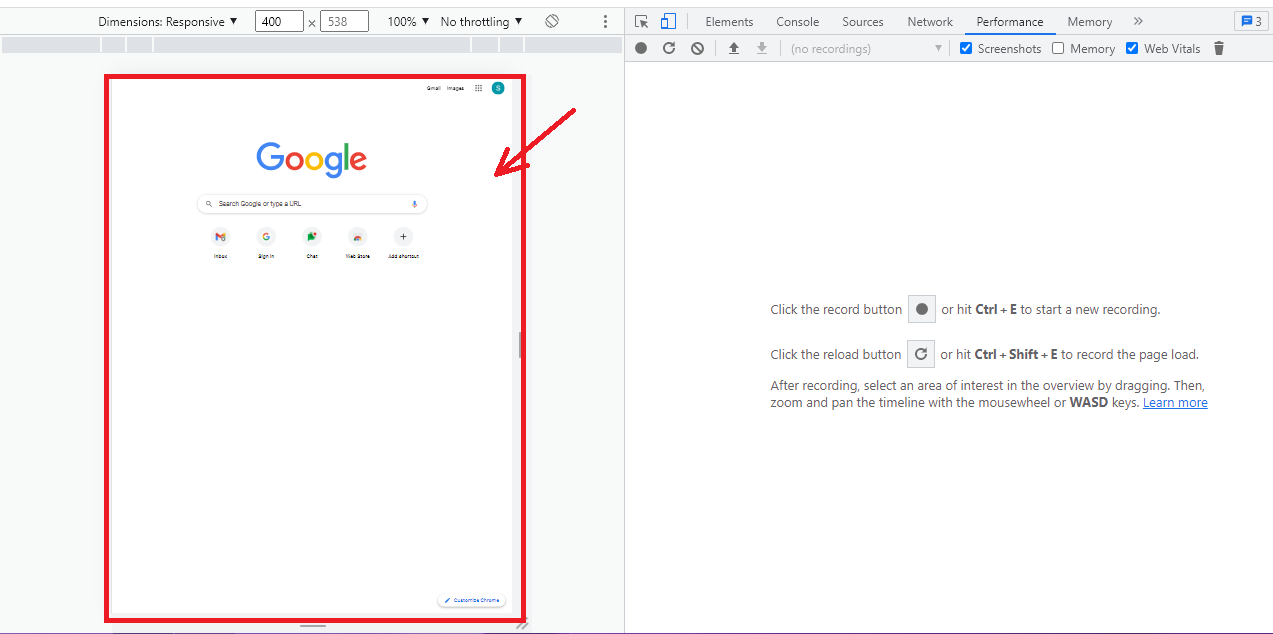
  • Press F12 or right click and do "inspect" in chrome browser
  • Enter URL
  • Go to "Performance" tab and do check "Web Vital" & click the reload button

How TBT is calculated?

For example, consider the following diagram of the browser's main thread during page load:
The above timeline has five tasks, three of which are Long Tasks because their duration exceeds 50 ms. The next diagram shows the blocking time for each of the long tasks:
So while the total time spent running tasks on the main thread is 560 ms, only 345 ms of that time is considered blocking time.

What is a good score?

There is a general understanding that a good score is in less than 100ms. 


How to optimize it?
  • Reduce JS execution time
Minify and compress your code & Remove unused code.
  • Optimize CSS
Minify and compress your CSS & Remove unused code.
  • Minimize main thread work
Utilize web workers to do tasks off the main thread & Cut the complexity of your styles and layouts
  • Reduce third party code
Third-party JavaScript often refers to scripts that can be embedded into any site directly from a third-party vendor. These scripts can include ads, analytics, widgets and other scripts that make the web more dynamic and interactive.

What is Cumulative Layout Shift (CLS)?

Cumulative Layout Shift (or CLS) is a measure of how much a webpage unexpectedly shifts during its life. For example, if a website visitor loaded a page and, while they were reading it, a banner loads and the page jumps down, that would constitute a large CLS score.

How do you measure Cumulative Layout Shift?

To analyze performance in PageSpeed Insights:
  • Enter a website URL into Google's PageSpeed Insights tool.
  • Click 'Analyze.'
  • Check your performance. You can review both mobile and desktop performance, which you can switch between using the top left corner navigation.
To analyze performance using Lighthouse tools:
  • Open up the website you want to analyze in Chrome.
  • Navigate to Developer Tools by clicking the three dots in the top right corner of the browser window, choosing “More Tools” and then “Developer Tools.”
  • When the console opens, choose “Lighthouse” from the options along the top.
  • Click “Generate Report.”
How to analyze Cumulative Layout Shift issue on website?

  • Press F12 or right click and do "inspect" in chrome browser
  • Enter URL
  • Go to "Performance" tab and do check "Web Vital" & click the reload button
  • Click on each "Layout Shift" in red to analyse which elements need to be fixed
Whats is a good CLS score?

A good cumulative layout score is anything less than 0.1.
How to optimize it?
  • Fonts
Use fonts that are similar to system fonts, Use system fonts to begin with & Self host your fonts
  • Image
Optimize your image in JPEG or PNG format, Convert these optimzed images in WEBP format & Specify proper size for images 
  • Iframe or Embedded Elements
Give your embedded elements proper size to avoid layout shift
  • Ads
Allot space for ads and set fallback image in case ads spots don't get fill

How to find current Device Usage report in Google Analytics?
  • Open up the Audience tab, and select Mobile and Devices.

Imp SEO QA

 What are the main ranking factors that influence Google’s search results today?

1. Content Quality & Relevance

  • Helpful, original content that satisfies search intent.
  • Strong E-E-A-T (Experience, Expertise, Authoritativeness, Trustworthiness).
  • Proper keyword usage in titles, headings, and contextually throughout the content.
  • Clear topical coverage — depth matters more than word count.
  • Semantic relevance (using entities and related topics that Google associates with the query).

2. Technical SEO

  • Crawlability: No blocked pages or broken links; optimized robots.txt and sitemap.
  • Indexability: Correct canonical tags and meta directives.
  • Core Web Vitals: Fast load time, interactivity, and visual stability.
  • Mobile-first indexing: Fully responsive design.
  • Structured data: Schema markup for better context and rich snippets.

3. Backlinks & Authority

  • High-quality backlinks from relevant, authoritative domains.
  • A natural anchor text profile — not over-optimized.
  • Internal linking that distributes authority effectively.
  • Mentions (implied links) and digital PR also contribute to trust signals.

4. User Engagement Signals

  • Click-through rate (CTR) from SERPs.
  • Dwell time / engagement — users spending time on your content.
  • Low bounce rate and strong on-site navigation.
  • Positive brand searches and repeat visits.

5. Local & Entity Signals (if applicable)

  • Consistent NAP (Name, Address, Phone) info for local businesses.
  • Verified Google Business Profile.
  • Entity relationships via structured data and consistent mentions across the web.

Imp News:

AI & LLM

 Difference in LLM and Google Search

LLM (e.g., ChatGPT)

  • Generates new answers using trained data.
  • Works on static knowledge (not live web).
  • Provides conversational, summarized responses.
  • May produce incorrect info (no direct sources).
  • Focus on understanding context and language.

Google Search

  • Retrieves existing web pages using crawling and indexing.
  • Always updated with real-time web data.
  • Shows ranked links and snippets.
  • Easier to verify info (shows sources).
  • SEO directly affects visibility and ranking.

What is a Large Language Model (LLM), and how does it differ from traditional search engines like Google?

A Large Language Model (LLM) is an advanced AI system  like GPT-5 or Gemini  trained on vast amounts of text data to understand, generate, and reason with natural language.

It uses deep learning (transformer architecture) to predict the next word in a sequence, allowing it to:

  • Generate human-like text,
  • Answer questions,
  • Summarize complex documents,
  • Write code or explain APIs,
  • And perform conversational reasoning.

LLMs don’t “search” the web in real time  they use patterns and relationships learned from data to produce answers.

How LLMs Differ from Traditional Search Engines (like Google)

How do LLMs (like ChatGPT) change the way people search for information online?

  • The Shift: From “Find Information”  “Get Answers”

Traditional search (Google/Bing) = users browse links to find answers.

LLMs (like ChatGPT, Gemini, or Perplexity) = users get the answer directly  often in conversational form.

This means people no longer search for pages; they ask for solutions.

  • Key Ways LLMs Change Search Behavior

A. Conversational Queries

Users ask longer, more natural, multi-step questions  closer to how they’d talk to a human expert.

B. Fewer Clicks, More Direct Answers

LLMs summarize multiple sources in one response, which means:

Less traffic to traditional websites.

More emphasis on being the cited or trusted source that LLMs draw from.

C. Contextual, Multi-Turn Search

LLMs allow follow-up questions  users refine their query conversationally (“Show me the code example,” “Compare costs”).

That creates deeper, guided search sessions  something Google search doesn’t handle natively.

D. Emergence of AI Discovery Platforms

Tools like Perplexity.ai, ChatGPT with browsing, and Google AI Overviews blend LLMs and traditional search.

So content needs to be:

  1. Factually precise (to avoid being excluded),
  2. Semantically rich (clear context and relationships),
  3. Authoritative (so AI models trust it enough to reference).

  • SEO Implications for a Company like Stripe

  1. Focus on “answerability”  make every guide or page self-contained, clear, and factual.
  2. Structure content with schema, FAQs, definitions, and question-based subheadings.
  3. Maintain authoritative tone & brand consistency so Stripe is recognized as a reliable source in AI answers.
  4. Track brand mentions and AI citation visibility (e.g., Perplexity sources, AI Overviews).

How can businesses optimize their content for visibility in AI-generated answers or chatbots?

  • Understand the New Discovery Model

AI chatbots (ChatGPT, Gemini, Perplexity, Copilot, etc.) don’t show a list of blue links  they synthesize answers using trusted sources.

To appear in those synthesized answers, a business must create content that’s factual, structured, and authoritative enough for AI systems to confidently reference or cite.

  • Optimize for “Answerability”

AI models extract concise, verifiable facts. So content should be designed for direct question-answer use:

  1. Use clear, question-based headings (H2s)  e.g., “What is a payment gateway?” or “How does Stripe’s API handle recurring billing?”
  2. Provide short, factual summaries (4060 words) immediately below those headings.
  3. Add definitions, stats, and examples in plain language.
  4. Use FAQ sections and schema markup (FAQ, HowTo, Product) to help AIs identify context.

  • Strengthen E-E-A-T (Experience, Expertise, Authoritativeness, Trustworthiness)

AI models prioritize credible voices.

To reinforce that:

  1. Use expert bylines  “Written by Stripe Developer Advocate.”
  2. Reference official documentation, research, or regulatory standards.
  3. Maintain consistent, brand-backed facts (API specs, pricing, security compliance).
  4. Keep content updated and timestamped  freshness signals reliability.

  • Structure Content for Machine Readability

  1. Implement structured data markup so AIs understand entities (products, prices, use cases).
  2. Use clean HTML hierarchy  H1  H2  H3 with consistent topic grouping.
  3. Create clear internal link networks between core topics (e.g., from “Payments API”  “Billing Integration”).
  4. Avoid fluff  AI models downweight vague or promotional language.

  • Publish on Trusted Platforms & Earn Mentions

LLMs train or reference content from high-authority sources:

  1. Earn citations or backlinks from reputable media, developer forums, GitHub, or industry case studies.
  2. Encourage mentions on discussion platforms (Reddit, Stack Overflow, Medium)  where AI models often learn contextual examples.
  3. Use open-access content (not gated) to increase crawl and training visibility.


Imp News:

Friday, 24 October 2025

How to block internet access for specific apps in windows 11

For Outbound Rules

Step 1: Open Windows Defender Firewall and navigate to Outbound Rules
  • Click the Start button and type "Windows Defender Firewall".
  • Click on Windows Defender Firewall in the search results.
  • Click on Advanced Settings on the left sidebar.
  • Select Outbound Rules from the left-hand menu.
Step 2: Create a new outbound rule
  • Click New Rule on the right-hand side.
  • Select Program and click Next.
Step 3: Specify the program path
  • Select This program path.
  • Click Browse and navigate to the program's executable (.exe) file. This is often found in C:\Program Files or C:\Program Files(x86).
  • Select the program's .exe file and click Open.
  • Click Next.
Step 4: Block the connection
  • Choose Block the connection and click Next.
Step 5: Set the rule to apply and name it
  • Check the boxes for Domain, Private, and Public to ensure the block is applied across all network types.
  • Click Next.
  • Give the rule a descriptive name (e.g., "Block [Program Name]") and optionally add a description.
  • Click Finish.

For Inbound Rules

Step 1: Open Windows Defender Firewall and navigate to Outbound Rules
  • Click the Start button and type "Windows Defender Firewall".
  • Click on Windows Defender Firewall in the search results.
  • Click on Advanced Settings on the left sidebar.
  • Select Outbound Rules from the left-hand menu.
Step 2: Create a new outbound rule
  • Click New Rule on the right-hand side.
  • Select Program and click Next.
Step 3: Specify the program path
  • Select This program path.
  • Click Browse and navigate to the program's executable (.exe) file. This is often found in C:\Program Files or C:\Program Files(x86).
  • Select the program's .exe file and click Open.
  • Click Next.
Step 4: Block the connection
  • Choose Block the connection and click Next.
Step 5: Set the rule to apply and name it
  • Check the boxes for Domain, Private, and Public to ensure the block is applied across all network types.
  • Click Next.
  • Give the rule a descriptive name (e.g., "Block [Program Name]") and optionally add a description.
  • Click Finish.